

 Apple Podcasts
 Spotify
 YouTube
 Amazon Music
 iHeartRadio
 Podchaser
 Podcast Addict
 Castbox
 PocketCasts
 PlayerFM
 Castro
 RSS Feed
 Nobody Left Behind: Emergency Management Through an Accessibility Lens | With Jen McEachen a deafblind emergency manager and ASL interpretation

Emergency alerts are supposed to reach everyone - but they don’t. In this episode, Tim Conrad speaks with Jen McEachen, a deafblind emergency management professional who has spent years identifying the gaps that leave millions of people behind during disasters. Jen shares what daily navigation looks like with deafblindness, why current public notification systems fail, and how simple changes can dramatically improve access.
Emergency alerts are supposed to reach everyone - but they don’t. In this episode, Tim Conrad speaks with Jen McEachen, a deafblind emergency management professional who has spent years identifying the gaps that leave millions of people behind during disasters.
Jen shares what daily navigation looks like with deafblindness, why current public notification systems fail, and how simple changes - from ASL integration to accessible document formats - can dramatically improve safety for all communities.
Together, they explore preparedness guides, evacuation challenges, nonprofit collaboration, and the intersection of disability with Indigenous and 2SLGBTQ+ needs. This conversation is a candid look at the barriers people with disabilities face in emergencies, and the practical steps local governments, First Nations, and crisis communicators can take to ensure nobody is left behind.
Resources:
Accessible Standards Canada - Federal Standards of Emergency Measures:
Federal Standards of Emergency Egress:
Accessible Canada Act:
https://www.canada.ca/en/employment-social-development/programs/accessible-canada/act-summary.html
Visit www.communicationspodcast.com for more detailed show info including photos and videos.
00:00 - — Tim introduces disability statistics in Canada and welcomes Jen McEachen to discuss accessibility in emergency management.
01:08 - — Jen explains her lived experience with deafblindness and how it shapes her work in emergency management.
02:04 - — Jen describes her daily routines, guide dog use, and challenges accessing accessible educational materials.
03:13 - — Jen outlines major accessibility gaps in public notification systems for deaf, blind, and deafblind communities.
05:15 - — Jen emphasizes recruiting people with disabilities to test emergency alert systems and provide meaningful feedback.
07:20 - — Jen discusses revamping preparedness guides to include modern technology and intersectional accessibility needs.
10:06 - — Jen explains why emergency documents must be available in ASL, Braille, audio, large print, and other formats.
11:57 - — Tim shares lessons from the 2017 Cariboo wildfires and how audio updates improved accessibility.
13:11 - — Jen highlights the Accessible Canada Act and the need for national emergency standards aligned with provincial laws.
15:26 - — Tim describes Halifax’s Vulnerable Persons Registry and metrics showing accessibility boosts engagement.
17:04 - — Jen reflects on inclusive podcasting, ASL interpretation, and the ongoing gaps in emergency management.
18:21 - — Jen explains how nonprofits can collaborate with emergency managers to support people with disabilities.
22:27 - — Jen shares global statistics showing low preparedness among persons with disabilities and gaps in evacuation readiness.
24:32 - — Jen identifies training gaps for ESS volunteers and the need for lived experience instruction.
27:30 - — Jen describes collaboration with nonprofits, ASL emergency training, and inclusive emergency exercises.
29:35 - — Jen discusses intersectionality between disability, Indigenous communities, and 2SLGBTQ+ populations.
31:03 - — Jen explains how municipalities can collaborate directly with people with disabilities to strengthen emergency planning.
33:00 - — Discussion on touring facilities, gathering accessibility feedback, and building relationships with disability advocates.
35:00 - — Jen highlights the need for consistent accessibility practices across provinces and emergency systems.
37:00 - — Exploration of adapting reception centres, arenas, and EOCs to support diverse accessibility needs during evacuations.
39:00 - — Jen emphasizes hands on training and lived experience participation to improve emergency exercises.
41:00 - — Conversation on how nonprofits like CNIB and DeafBlind Community Services can support emergency managers.
43:00 - — Jen discusses the role of smartphones, apps, and assistive tech in accessible emergency communication.
45:00 - — Reflection on intersectionality between disability, Indigenous communities, and 2SLGBTQ+ populations.
47:00 - — Tim and Jen stress that inclusion must begin at the planning stage to build trust and resilience.
49:00 - — Jen advocates for accessibility education in emergency management training programs.
51:00 - — Jen outlines long term goals for aligning provincial and federal accessibility standards by 2040.
53:00 - — Tim and Jen share lessons on collaboration and continuous improvement in accessibility.
55:00 - — Jen reinforces “Nothing About Us Without Us” as the guiding principle for inclusive emergency management.
57:00 - — Tim closes with key takeaways and the “Nobody Left Behind” message for crisis communicators.
00:00:00:01 - 00:00:28:05
Tim Conrad
Disabled. It is a word we often use as a label for others, without realizing we may be disabled someday from having fun or doing something stupid, from a disease or from aging. We are surrounded by people who are born able bodied and then became disabled at some point. More than 6.2 million adult Canadians, or 22% of the population in this country, are living with some form of disability that affects their level of freedom, independence or quality of life.
00:00:28:05 - 00:00:50:01
Tim Conrad
That does not include people 15 years and under. So the number is higher. Jen McEachen is a person with deaf blindness who has managed volunteer resources and worked in emergency management. She has spent recent years exploring the trends and gaps related to the needs of the disability community. Jen brings lived experience working with emergency management professionals and the disability community.
00:00:50:02 - 00:01:08:20
Tim Conrad
She's a member of the Canadian Risks and Hazards Network, which is where I met her. And you will see on their social media. They lead with accessible communications. First. Welcome to the wildfires, Floods and Chaos Communications podcast. I'm your host, Tim Conrad. And here is Jen McEachen describing the disabilities she navigates.
00:01:08:21 - 00:01:26:03
Jen McEachen
And I was born with this disability. So I have the Olympic experience of accessibility challenges. And then moving into the emergency management field to help individuals navigate all four facets of the emergency management cycle.
00:01:26:04 - 00:01:33:11
Tim Conrad
And can you tell us a little bit about kind of what your day is like and sort of some things that you do have to navigate and what it's like for you?
00:01:33:13 - 00:02:04:18
Jen McEachen
Well, I am a guide dog user and I've been using a guide dog for 26 years, so my day does have kind of a routine. I do a lot of walking. I am a student with the Justice Institute of British Columbia in the Bachelor's and Security Management program, and one of the challenges is getting articles and textbooks in accessible format that I can read with my screen reader and also in Braille.
00:02:04:19 - 00:02:52:02
Jen McEachen
And I also I used a lot of different technologies, such as zoom, to connect virtually with individuals in my consulting business and reading accessible websites and documents, especially within the emergency management side of things. So and all kinds of different things so varied from day to day. I never know what kind of work I'll be doing, especially with emergency management, plus all the various committees that I sit on that is related within the field I work in, such as the Canadian Risk and Hazard Network as a board of directors, and my role is to assist with making sure all our social media website documents are available in accessible format.
00:02:52:05 - 00:02:54:20
Jen McEachen
So does that give you an idea?
00:02:54:22 - 00:03:13:20
Tim Conrad
Yeah. That does. And as you were giving that answer, you might have heard my dog park in the background. So I think my dog was saying hi to your dog. So buddy says hello to parmesan who is always by your side. So and I'll make sure we'll sneak a picture in for people to be able to see parmesan in the show.
00:03:13:22 - 00:03:23:15
Tim Conrad
Yeah, yeah, real sweet dog. So what advice could you offer? Information officers and crisis communicators that would help them to be more accessible.
00:03:23:16 - 00:04:00:15
Jen McEachen
Well, one of the key issues, especially with the current public notification system, if not inclusive of all audiences and the problem that I have encountered is the language barriers, especially with the deaf and blind community and how they are able to read the information. And I have encountered scenario where I had to explain the difference between, for the deaf community, the difference between their alert systems in their apartment or house, their fire alarm and their doorbell.
00:04:00:17 - 00:04:34:18
Jen McEachen
Whereas the public notifications on your phone, they is two separate things. They didn't understand that. The other problem that I have seen is especially with new people that move into the area, for example, they are not well equipped to understand their area knowing the street names. So in that instance, we need both visual information and text information. So it includes everybody in plain language that they can understand.
00:04:34:20 - 00:04:54:17
Jen McEachen
So there is a lot of contributing factors. And recently the Public Safety Canada and the Canadian Radio and Telecommunications CRTC did a consultation back and fall of 2025 requesting feedback on the current system at what changes needs to be made.
00:04:54:19 - 00:05:15:01
Tim Conrad
So it's it's very interesting like because emergency alert systems should be alerting everybody, right? It doesn't matter who it is. And I have a rule that nobody is left behind, right. That my team has heard that from me. When we've been out there, nobody is left behind. We always have to think about all of the people that we might be missing in our communication.
00:05:15:01 - 00:05:35:08
Tim Conrad
So you talk about the emergency alert system and the public notification system. So for some people, they might know different names, the alert ready system across Canada or the BC Emergency Alert System. And then at a local level, depending on where you are, you might see a number of different systems in place there. Some have names like Voyage or Bridge Alert.
00:05:35:10 - 00:05:47:08
Tim Conrad
There's a bunch of different systems out there. So how can the the people that operate those systems improve on public notification? What are some real hard ways that they can look at to to improve.
00:05:47:09 - 00:06:16:08
Jen McEachen
Recruit people with disabilities to test it? Because if you don't include them and allow them to provide feedback, how are you going to know what to do in the future? Like we do the testing twice a year, but they're not enough feedback that's going in to those different manufacturers who say, here are some areas that you need to prove with your network or the notifications.
00:06:16:09 - 00:06:37:18
Jen McEachen
This is how I would word it. Or how can we implement AFL into these notifications and where can we get it in different languages, all inclusive information where we can improve on those areas. But right now they're not getting that feedback and they're making the same mistakes over and over and over again.
00:06:37:19 - 00:06:58:07
Tim Conrad
Yeah, yeah. That's right. And we want to like I think I'll impress this later on in the podcast with some, some other information. I hope that we'll help people to understand. But when you do things for people with disabilities, you're doing the same thing for everybody. So everybody benefits. And there is a I have actual true measurement that shows that.
00:06:58:07 - 00:07:20:05
Tim Conrad
So it's important to look at these things. And there are small steps that we can continue to add. And yes, they seem a little bit bigger off the start. But once you get used to it, it just becomes part of the process. And so I think there are some really good ways of improving those notification systems. And it's important to make sure we're checking all the boxes within our process when we're going through that as, as, as information officers.
00:07:20:05 - 00:07:38:19
Jen McEachen
I agree. And invite them to even going out to different nonprofit organizations that serve people with disability. There are the ones that will know who the best people to connect with, that knows the system well and can provide that feedback.
00:07:38:20 - 00:07:50:18
Tim Conrad
Yeah. That's right. Yeah, absolutely. And so what preparedness and resource documents should local governments in First Nations consider developing to help connect better with people with disabilities?
00:07:50:18 - 00:08:24:06
Jen McEachen
Well, I'm actually going to do a little plug here on the people with Disabilities Advisory Committee with emergency management climate Readiness and prepare BC right now. And we're currently revamping completely starting from scratch the preparedness guide for people with disability, because the old documents that was used, you couldn't even read them in the PDF files. And the information did not include the current systems.
00:08:24:07 - 00:09:10:12
Jen McEachen
Now, for example, the use of cell phones and smart modes and all the other technologies. And so, like myself as the person with the guide dog, I was able to provide feedback on how the implement information on guide dogs. And we're hoping to have new copies of able by the end of 2026, so stay tuned for that. So yeah, and really on and it needs to include everybody, the intersectionality of people with disabilities and all the other groups such as the LGBTQ community, indigenous everybody to come together to share feedback on how to improve because, for example, the addition is community.
00:09:10:13 - 00:09:38:05
Jen McEachen
Do you have to consider their needs and their cultures because they have their own sign language compared to ASL? So yeah, there's a whole different aspect that needs to be implemented in these resources. Each province does things differently, but I would love to see consistency in all of them. But I don't think they'll ever happen. But pardon me is a pipe dream.
00:09:38:08 - 00:09:39:14
Jen McEachen
So yeah yeah.
00:09:39:15 - 00:10:01:15
Tim Conrad
Yeah absolutely. And I you know it's it's steps and I'm happy to say like in the last year or so I've been able to integrate ASL into a crisis communications plan that I developed, which was really exciting. And and I'm able to now take that to another level as well. So there's there are things you can do if you start to really try to just wander down that path.
00:10:01:15 - 00:10:06:08
Tim Conrad
So I'm curious how you would distribute the documents and things like that. How do you get them around to people?
00:10:06:08 - 00:10:47:11
Jen McEachen
Well, what do you gain? All different formats, like for example ASL, because the deaf community literacy level is pretty low. So making sure that you have ASL implemented in these documents, the way you do it is you would have different interpreters on the screen, on the website, where the documents have a real copies of bills that can be sent in the mail or through a Braille format on the computer that you can download and read off of Braille display, large grant PDF audio, the daisy format.
00:10:47:11 - 00:10:54:01
Jen McEachen
So there are all kinds of formats that need to be implemented in those documents. So it reaches out to everyone.
00:10:54:02 - 00:11:23:14
Tim Conrad
Yeah. Yeah that's great. And I, you know, does good, good opportunity for me to bring up a thing from my past in 2017, the wildfires and the caribou. I talk about them a lot on the podcast because it was such a massive event and really challenged a lot of the systems that existed at the time. And one of the things that we did was we recorded our video updates that we did almost on a daily basis, and we would take the audio and cut that off and then put it on to the phone line so that people could phone in and listen to the update on the phone line.
00:11:23:15 - 00:11:42:03
Tim Conrad
And I was shocked at how many people really picked up on that. We had measurement on how many people were clicking through that option, and it was shocking to me how many people were doing it because we had two things. We had people that couldn't quite get the information through a video. Maybe it was at the time internet was not as wide widely available in that region.
00:11:42:03 - 00:11:57:07
Tim Conrad
So watching a video is the more difficult, but also those with disabilities. It was an opportunity for them to be able to hear a very clearly through their system. What was going on? Can you talk maybe a little bit where we were heading down the right path with that? Because it certainly seemed like we were.
00:11:57:08 - 00:12:27:16
Jen McEachen
It is. But the other issue with audio, which is great for blind individual, blind, very impaired individual because the audio information is better. But again. What's the deaf population and the deaf blind, which gets even more complicated with their needs because they're they have very limited access to the computer and their knowledge of using the computers. Wait limited.
00:12:27:17 - 00:12:45:18
Jen McEachen
So we still have unfortunately, we still have a long ways to go to reach everybody. Audio is great, but also having a transcript is essential as well, so that it reaches to the deaf blind population so they can read the text only as well.
00:12:45:21 - 00:13:03:14
Tim Conrad
So yeah, and that's one of the most honestly key key roles. When you put out a podcast, one of the most important things to put out is the transcript to go with it. That helps not only with obviously search search ability of your podcast, but for those people that need to look at a transcript in order to be able to understand what is going on.
00:13:03:14 - 00:13:11:19
Tim Conrad
So so where can people find some resources to help them along? What are some other spots that they could go to beyond those that you've mentioned already? Well.
00:13:11:23 - 00:13:46:05
Jen McEachen
I was going to share it later on, but one of the key things that I want to reiterate is the Accessible Canada Act, which was the it received Royal assent in 2019, if I recall, and that's a federal act. And each province had their own accessibility act as well. And under the Accessible Candidate Act, we have the accessible accessibility standards of Canada, and they implement different standards for different areas that is required.
00:13:46:05 - 00:14:21:18
Jen McEachen
And one of the key things that I'm going to be reiterating repeatedly is the federal standards of emergency measures is currently had not recruited individuals to join that committee. But once a committee is created, there's going to be a draft standard for individuals to review. The reason why I want to share this is a lot of emergency management professionals don't know this exist because they focus on their municipality and their local authority and provincial laws.
00:14:21:20 - 00:14:55:21
Jen McEachen
Unfortunately, for example, with BC, with the current changes, with the emergency management, may we get the whole thing? Yeah. But right now, if focus is heavily on the indigenous population, which is great, but I think we need to find a way to combine it together. And unfortunately with standards is not law compared to actual acts. And so we need to find a way to implement it together.
00:14:55:21 - 00:15:25:23
Jen McEachen
But luckily for British Columbia, where I reside, we have a memorandum of understanding MoU with accessibility standards of Canada. So the accessible act that we have will align with the federal standards. But right now we're not there yet. We're supposed to be ready by 2040. So wanted to reiterate that important aspect. I kind of derailed a little bit there.
00:15:26:00 - 00:15:49:07
Tim Conrad
Yeah, that's all right. And I wanted to bring up just something that people can look to. And this is actually in relation to a podcast that I'm just wrapping up the final stages of producing. And that's the Lake Echo and Porters Lake fire from 2008 Nova Scotia. And out of that came many years later. They developed what's called a vulnerable persons registry.
00:15:49:13 - 00:16:11:21
Tim Conrad
And this is with the Halifax Regional Municipality there. So it's a voluntary registry where people can register and be identified so that they can get help when something happens. And that came out of the 2008 fires because there was a recognition that, wow, we we don't have something like this. And the what if scenarios came very real in that, in that particular fire.
00:16:11:21 - 00:16:37:14
Tim Conrad
So and I also wanted to bring up one more on the stat side of things that I have from the past. When we added captions to our videos in 2017, we saw a metric rise in our watches and views that we had not seen except when we first started putting videos on, but it was a 38% rise in the amount of time people were watching, and I believe it was a 32% time in the amount of watches we were seeing.
00:16:37:14 - 00:16:57:07
Tim Conrad
So it immediately, just by that little thing of having captions on a video, which helps people with accessibility needs. It helped everybody. Right? So it was just like truly remarkable. And we're not talking small numbers here. We had over a million views on our videos that year. So we had very good metrics to be able to pinpoint things like that.
00:16:57:07 - 00:17:04:05
Tim Conrad
So always think about it because it's going to benefit, as I said, other people and I have lots of good metrics like that that can show it.
00:17:04:06 - 00:17:29:15
Jen McEachen
I think that's fantastic because that shows the inclusivity. And you saw the changes and you you kept up with those changes and implemented it. And I think it's if you continue that, the more people will come, come forward to your show and hopefully other podcasters will follow suit and see that what you implemented will help them make those changes.
00:17:29:16 - 00:17:40:19
Jen McEachen
There's a podcast that I listened to a long time ago that implemented a separate forecast that she recorded, that had ASL interpreters interpreting everything.
00:17:40:21 - 00:17:41:17
Tim Conrad
Wow.
00:17:41:19 - 00:18:09:15
Jen McEachen
Yeah. So yeah. And, you know, having all of those mediums covered is essential. And I like I will say again, it's a pipe dream that is everything gets inclusive for all people. Nothing. I can't remember the saying, but there's the accessible Canada Act. Nothing with us is without us or something like that, but it shows the statement that you provided earlier how we don't want to leave anybody behind.
00:18:09:16 - 00:18:21:11
Jen McEachen
And unfortunately, in all phases of the emergency management cycle, that's the gap. We're still leaving a lot of people behind. So yeah.
00:18:21:13 - 00:18:39:12
Tim Conrad
Yeah. And so we're going to shift a little bit here. We're going to talk about nonprofits a little bit. And how can nonprofits work with persons with disabilities. And I just wanted to note that you'll see the acronym PWD in relation to that. How can they work with emergency management professionals to collaborate ahead of disasters?
00:18:39:13 - 00:19:13:15
Jen McEachen
For those who are not familiar stats for persons with disabilities. So when I reiterate that that's what that means. And for nonprofits, what I like to see, and this is kind of the kind of a work that I'm trying to work on as well, is to integrate ways for nonprofit organizations to reach out their local authority and work with local emergency management professionals to include be included in their planning meetings.
00:19:13:15 - 00:19:49:08
Jen McEachen
Because they are the nonprofit organization. I'm going to use seeing ideas in the example NIB. Well, they will have professionals, including people with lived experience, can provide suggestions on what they can add to their plans or business continuity plans, what they can do with the person with disability. A lot of workplaces have a peep peep the personal evacuation emergency evacuation plan for people with disability.
00:19:49:09 - 00:20:34:07
Jen McEachen
However, there's a lot of gaps in that and that needs to be implemented not just for the person but the overall organization. So this is where it was lived. Experience and collaborate with the emergency management professionals, especially with the preparedness and mitigation stage. Starting their first is highly beneficial. And before we get the response and recovery phases, they need to be to contact for those individuals that may need to be evacuated, such as NIB Plan community services in Ontario, they have their emergency services.
00:20:34:08 - 00:21:13:08
Jen McEachen
They need to have a voluntary or texting tree to contact them and say, hey, we need these services. This community, the deaf blind community, is going to need help. So that's we're trying to get that started in BC, but there's a lot of roadblocks up we're experiencing right now. But even with Ms.. Multiple sclerosis or people with paraplegia, they have a lot of complicating factors because wheelchairs, many of the rise wheelchairs have a lot of issues like the batteries and how where they can park.
00:21:13:08 - 00:21:45:00
Jen McEachen
And and most places municipalities will have a predetermined reception center that already established Prince George hub trailers that they use for reception centers, plus their emergency ops center, the EOK. But if it gets too large, then we use the local college or our hockey arena. So looking at the accessibility lens plays where there's lots of places that a person can access.
00:21:45:00 - 00:21:58:00
Jen McEachen
Okay. So we have to think about the whole cycle, not just the preparedness and mitigation with the community coming together. This is a huge community effort and they're not being included in that.
00:21:58:00 - 00:22:27:20
Tim Conrad
So yeah, I as part of a project I was part of a few years ago called the Pathways to Preparedness Project, which was a Canadian Red cross funded project that actually came out of those 2017 fires I was talking about earlier. We were looking at some of the gaps that might be there for the folks with accessibility. And I was, you know, quite astonished by some of the stories I heard from folks including quadriplegics, people with complete blindness, Parkinson's, you know, lots of different backgrounds that that added to it.
00:22:27:20 - 00:22:35:07
Tim Conrad
So can you tell me what some of the gaps that you've observed during evacuations for individuals with disabilities?
00:22:35:09 - 00:23:11:05
Jen McEachen
I have not seen I haven't had too many interactions on this aspect, but what I can tell you is most people are not prepared at all. Just to reiterate, the United Nations of Disaster Risk Reduction, they did a statistical analysis worldwide. And one of the key points is 20 of the the said they could not evacuate independently and also 85.
00:23:11:07 - 00:23:47:14
Jen McEachen
Were not included in participation of the planning. So if they're not included in the planning, they're not going to be able to evacuate successfully. So there's going to be a lot more panic and stress for them if they are not prepared. The couple of years I sat in a focus group, so picture me as emergency management professional in the room, and everybody else was totally blind and live in the Lower Mainland of which is Metro Vancouver area, for those not familiar with British Columbia.
00:23:47:15 - 00:24:08:20
Jen McEachen
And that's area is very much earthquake prone. That's the biggest risk. Okay. And on that call, many of those folks that they didn't know what to do first quake happen. They did not know about drop cover and hold on. None. And that's scary to think about.
00:24:08:22 - 00:24:32:16
Tim Conrad
Yeah it is it is indeed. Right. And and I can kind of associate. Why. Because a lot of that campaign around that has been very graphic or video based and maybe hasn't been built properly with keeping people with accessibility needs in mind. So so back to that evacuation. Are we serving individuals with disabilities with respect when they arrive after evacuating?
00:24:32:17 - 00:25:01:08
Jen McEachen
One of the issues that I have seen with the training with SS or emergency support Services volunteers is they're getting the minimal basic knowledge of what to do when a person with a disability comes to do we know registration death? Do they know where to access information to help them? For example, a person whose death line, how are they going to communicate with the death line individual?
00:25:01:10 - 00:25:35:17
Jen McEachen
What are those? What is that person needs going to be because they're all different. So with that blind individuals, they could be as far as communication, it could be two had manual ASL print on home or writing on an iPad. They're all different. So how are they going to understand. And the other problem is they're learning just from videos and not any real life simulations for learning from a lived person who knows how to teach these things.
00:25:35:17 - 00:26:04:03
Jen McEachen
For example, I've done training sessions mostly on guide dog related presentations. Is teaching help teaching people how to do proper sighted guide? They don't know how to do that, right? Lot of the times people they first will grab the person's hands. That's wrong. The blind person needs to reach the elbow. So most people don't do that. Know that sometimes if it will say that.
00:26:04:03 - 00:26:06:08
Jen McEachen
But you need to practice it.
00:26:06:10 - 00:26:08:22
Tim Conrad
Yes, yes.
00:26:09:00 - 00:26:14:07
Jen McEachen
Bare minimum training for yes. Not just yes, but all emergency management professionals.
00:26:14:07 - 00:26:30:02
Tim Conrad
So so true. Right. I was so I have to say I just quick moment to say that I was so lucky I the college that I went to school for public relations, just down the hall from us was the ASL class. So it was it was awesome. They were good. Group parted with them.
00:26:30:04 - 00:26:30:15
Jen McEachen
Wow.
00:26:30:21 - 00:26:49:00
Tim Conrad
And yeah, it was. We had lots of fun together. But yeah. So it did teach me because there was it was the school at the time where it was located. The building was very old, dated back to World War one, World War Two era. And and so getting around was not easy. So we all became part of the help to get around.
00:26:49:05 - 00:27:10:15
Tim Conrad
So I'm going to go back though, now to this SS piece that you just brought up. And and when you're doing volunteering and or ongoing training, like you talk about getting the people in there and getting that lived experience, and certainly I hear there's an opportunity to always bring somebody with the disability into an exercise or into a preparedness moment.
00:27:10:16 - 00:27:30:09
Tim Conrad
You know, like it's not that difficult to do with this project I just mentioned. It's a number of phone calls. We actually did do a focus group, but the phone calls were actually super helpful to help us build out a little bit of a strategy. So how can ES and other health services training be implemented for those who require extra supports?
00:27:30:10 - 00:28:10:20
Jen McEachen
Like I suggested earlier, is that whole collaboration with nonprofit organizations because they are the ones that will be the experts on how to train on for the blind, visually impaired and blind population, on the deaf, the sighted guide and the communication needs. And actually, I think it was two years ago, can't remember now, but Canadian Risk and Hazard Network actually provided they did a collaboration with Humber College, they offered ASL courses in learning different signs in emergency situations and if we centers etc..
00:28:10:20 - 00:28:39:12
Jen McEachen
So those are great ways to collaborate so that even if the basic things, it'll help that person feel that connection when they first walk in the door. And the other thing is, once you get those nonprofits, get them to sit on those exercises as well. And that's what I, as part of my consulting, that's what I offer, is the observation of the exercise and provide suggestions on improvement.
00:28:39:13 - 00:29:02:05
Jen McEachen
And the other one that I think is great, and I don't know if they do this anywhere else in Canada but Vancouver Airport. They always do a call for actors, so that's a great time. If you're a person with a disability to put your foot in the door and say, hey, I would like to be an actor for your exercise.
00:29:02:07 - 00:29:35:16
Tim Conrad
Yeah, yeah, I absolutely is. And I honestly, as someone that's put on different types of exercises or participated in them, that it would be so welcomed in, it really would. We are always desperately trying to find those, those different population needs that are out there. And on that note that like that intersection of disability with other population needs, what do we need to be considering for, you know, like the two SL, LGBTQ and indigenous communities, how that all intersects, like what are some things that we need to think about there?
00:29:35:17 - 00:30:05:08
Jen McEachen
I myself is still learning about the whole LGBTQ and the indigenous needs, but I can tell you that hearing their experiences is so essential. Approaching them and asking them what would work if you would need to evacuate? How can we help you? Is there anything we need to implement to be sure that your stress is lowered when you are recovering from a disaster?
00:30:05:08 - 00:30:43:01
Jen McEachen
So those are the things that we're all going to be learning because it's all right. So the indigenous population has quite a high rate of people with disability. And so and their needs are going to be different from other populations. So it's really important to immerse yourself into their culture and understand how they can be helped. So bring in that culturally cultural safety and implement the with people with disabilities in.
00:30:43:05 - 00:31:03:09
Tim Conrad
That it is a key thing to consider. And you know, and on that note, with indigenous communities having a higher rate, that's a lot of that can be traced back to the colonial things that have happened to them. And all of those terrible things has resulted in this is one of the outputs, unfortunately, of that. So let's switch over to local governments now.
00:31:03:09 - 00:31:09:00
Tim Conrad
And how can they break down barriers, break down stigma and help underserved populations.
00:31:09:00 - 00:31:39:21
Jen McEachen
So this is one of the circumstances where it's a similar statement that I made where we all have to collaborate together. And the problem is, well, I let me stop back and rephrase. There are some communities that are communicating with people with disabilities and staying in touch with them to help collaborate. For example, here in Prince George, where I love, I am in contact with the team here in Prince George.
00:31:40:01 - 00:32:18:18
Jen McEachen
I've been a couple of times, I've done some collaborations with them to their trailers to give them guidance on anything that needs to be implemented, change, whatnot. So you, the emergency management departments, should take the initiative to reach out. Right? And one of the cities that had done job is Ottawa. They reached out to the disability community and created a webinar of preparedness that was inclusive of all people with disabilities.
00:32:18:18 - 00:32:47:15
Jen McEachen
They had live transcript captioning, ESL interpreter, everything that was available to them. And for those who would like to see a sample of it, they have a YouTube channel where that is available as well. So that's where that's one step. You can use that city as an example that has broadened their ability to reach out to the community and help them be prepared for disaster.
00:32:47:17 - 00:33:19:03
Jen McEachen
And many us great questions on other things that's not been considered. So there are other considerations, but I think more and more communities need to do that. There's not enough happening in that area. It's flow, but it slowly happening. And with the legislations and standards this will help. But the local at the local level, because it's so different, there's no universal.
00:33:19:05 - 00:33:22:14
Jen McEachen
And on top of that each person's needs are different.
00:33:22:17 - 00:33:34:03
Tim Conrad
Yes. Yeah. When you're thinking about those emergency measures, standards, what what kind of legislation that's currently there or new bills that are coming up that you would like to see changed?
00:33:34:05 - 00:34:12:10
Jen McEachen
Well, the current emergency measures standards, I'm just going to read the list of what the federal standards emergency measures is going to be looking at. There's emergency planning inclusivity. So that includes participating in all aspects of the planning measures guidance, which is the emergency preparedness guide that I described earlier. Training, self-explanatory communication methods. That's for example, the public notification alerts shelters.
00:34:12:11 - 00:34:44:02
Jen McEachen
That's a whole nother session that that needs to work services. So that's why individuals that you like assistive technology or devices and service stocks, those kind of things, medical assistance, that's like medical supplies and medical supplies, is one of the hot topics that had been discussed in the committee that I sit on with prepared BC and EMC are there's so many contributing issues.
00:34:44:02 - 00:35:10:13
Jen McEachen
For example, when you build your kit, you need extra medication, but some medications expire quickly more than others, and some doctors will give you extra refills, etc. so there's a lot of issues surrounding that that we're trying to overcome. And for that's a big one. That's another big one cause a lot of people with disabilities. Right? Yeah.
00:35:10:14 - 00:35:14:04
Speaker 3
Hello. Yeah.
00:35:14:06 - 00:35:36:01
Jen McEachen
So yeah. So that's the other thing. And the last one is evacuation because it depends on evacuation. For example, after earthquakes, for example. The key thing is especially for blind and deaf blind, they don't know if there's going to be hazardous once they step out the door. How are they going to do is get to safety safely, that kind of thing?
00:35:36:03 - 00:36:01:03
Jen McEachen
Yeah. Now I wish standards were long. Any problem with standards is not enforceable. So that's kind of the issue that I have with the legislation. While the emergency management legislation don't include any of that. And so it's just put on the side. It needs to be including everybody.
00:36:01:05 - 00:36:28:21
Tim Conrad
Yeah. So and it's fair. It needs to be legislated. Things that have been legislated in my time walking on this, this planet has been accessibility parking spots and ensuring that there are ramps to get into buildings and there's elevators and ways to move between floors, lots of different things. The fire alarm systems are changing all around us. So we're going from an old Bell system to the the blinking and, you know, loud screech of a of an alarm.
00:36:28:21 - 00:36:49:13
Tim Conrad
So there's, there's been legislated changes and they happen and they, they actually, you know, help everyone. When I look at accessibility parking spots, the people I see using the most are people that are elderly. And we don't often think about that until we're that age. Right. So but it's a reality that kind of creeps our way as we age.
00:36:49:14 - 00:37:03:06
Tim Conrad
And we need to realize that we might not be a person with a disability today, but we might be someday. So. And we would certainly benefit from the things that that are out there and legislated in place for us. So some great.
00:37:03:08 - 00:37:23:16
Jen McEachen
Yeah. And on that point, through the World Health Organization and the under are they made a point that one of six people worldwide will have a disability in their lifetime. So people don't think that oh, it'll never happen to me. I say, well, you never know. It will happen tomorrow.
00:37:23:18 - 00:37:39:13
Tim Conrad
So next up are three questions that I posed to every guest. So let's roll. What is one book, documentary or resource that you recommend for those learning about crisis emergency management? Or maybe even something like firefighting or accessibility? You know, who knows?
00:37:39:14 - 00:37:40:00
Speaker 3
Yeah.
00:37:40:01 - 00:38:22:04
Jen McEachen
And, you know, I read a lot of the other ones in our whole hour. The most important thing is as accessibility, one of the things that people should look at Accessible Canada Act and look at that, they're provincial as well, because some of them will be aligned with federal standards and also the accessibility standards of Canada. And for those that want to follow me on Facebook or LinkedIn, I will be letting folks know when the federal standards emergency measures will be available to recruit people that want to be a part to participate in the committee.
00:38:22:10 - 00:38:58:19
Jen McEachen
C tuned on that and then also the public consultation for the actual standards once the draft standards available, and also the United Nations of Disaster risk reduction. One of the things that they have implemented is a UN disability inclusion strategy. So I I'm on their email list, follow up with the different policy guides that they have implemented. Not all organizations or states have implemented policies within their country.
00:38:58:23 - 00:39:11:15
Jen McEachen
So I would actually recommend folks check out the United Nations Disaster Risk Reduction UN Disability Inclusion Strategy. Just see what they are and all the statistics in there. Sue.
00:39:11:16 - 00:39:20:20
Tim Conrad
Excellent. And what advice would you offer? Information officers or communicators that are managing crisis or emergencies that would help them to perform their job more effectively?
00:39:20:21 - 00:39:48:12
Jen McEachen
One of the key things that communications for neighbors and those that work in the communication fields, they need to implement accessibility in their social media channels. So if you ever have a chance to look at the Canadian Risk and Hazard Network social media pages on LinkedIn or Facebook, we implement image description. So if you're going to add a map to your thing, include image description.
00:39:48:12 - 00:40:06:06
Jen McEachen
So it includes everybody. So there are a lot of different ways to implement that. And also plain language theory very critical to implement okay. So those are the key points that I want to reiterate the accessibility side of things with social media.
00:40:06:08 - 00:40:07:00
Speaker 3
Yeah.
00:40:07:03 - 00:40:30:18
Tim Conrad
Yeah. And just so people out there know, if you hire a public relations professional, we are trained in plain language, as are journalists. So they're actually trained to write in plain language and to write at different grade levels. So we write at grade nine and grade six levels. We can go up to grade 12 and so on. So so yeah, my last question is how do you maintain your mental well-being during the most intense moments of response?
00:40:30:19 - 00:40:31:05
Speaker 3
Well.
00:40:31:05 - 00:40:53:00
Jen McEachen
I when I was during during my time that I used to be a Red cross star, I would be the one that would be covering and stay behind and covering while all the staff were out on respond. And and I'm very good at de-stressing. I have very good work life balance. I make sure that my weekends is not work related.
00:40:53:01 - 00:41:14:10
Jen McEachen
For example, I have to have a social life that's important and see doing other things like reading and walking, and it's really important to de-stress and taking care of yourself. I'm a perk of being deaf. I can sleep really heavily. I can get away with or between 4 to 8 hours of sleep, no problem. But sleep is important.
00:41:14:10 - 00:41:32:10
Jen McEachen
Trying to eat well and exercise, right? So all of those components will help you really well. And if you feel like you're going to get stressed, the best way to handle it is walk away.
00:41:32:12 - 00:41:46:17
Tim Conrad
We had a big surge in new listeners twice in recent weeks, and a big welcome to anyone new to the podcast. That's you, that's you. So thank you. This episode and many others are available in a caption video version, and this.
00:41:46:17 - 00:41:47:06
Speaker 3
One.
00:41:47:10 - 00:42:11:14
Tim Conrad
Has an ASL interpreter. I am always trying to make communications more inclusive for everyone beyond those with disabilities. A bit more about that at the end. I almost have the summer covered with episodes, and I hope you'll hear them throughout August and September. Much of that depends on disaster responses, especially wildfires, but so far so good if I'm able to keep producing.
00:42:11:15 - 00:42:35:14
Tim Conrad
You'll also see video episodes to match. If you want to see our video episodes, you can find them at Communications Podcast, on the episodes page, or on the Video podcast playlist at Butterfly Effect Communications YouTube channel. You can actually subscribe there, and you'll get a notification anytime there's a new video episode. Thank you for our best single day of downloads.
00:42:35:15 - 00:43:06:14
Tim Conrad
Mostly Chow, which is thank you in carrier, which is an indigenous peoples based up in northern British Columbia. Mostly child to our audience in Spain. Congratulations on that big win. And as Canadians, we really love that stage presence of your team. Thanks to viewers and listeners in these communities. Sydney, Australia, Sora, Italy, Surrey, British Columbia, Antioch, California, and Smiths Falls, Ontario.
00:43:06:17 - 00:43:27:11
Tim Conrad
Six continents, 60 countries, 700 communities. You're all out there. Thank you so much for joining, even if it's just for one episode, to learn a bit and share a bit of the journey with my guests. Mostly. If you have written in with guest suggestions, I have replied, so please check your spam folder. And now back to Jen McEachen.
00:43:27:15 - 00:43:54:18
Tim Conrad
My roots are in Special Olympics. It is there that I went from an introverted kid to extroverted adult. They taught me through small lessons how important it is to keep everyone involved in life's moments. They also showed me that disabilities are simply allowing those other abilities that we have to step into the spotlight and shine. Jen has set an example in how to communicate inclusive of everyone.
00:43:54:18 - 00:44:15:18
Tim Conrad
I encourage you to see some of the work she is doing at CR net on their social channels, and please contact her. Since meeting her last year, she has pushed me to add more to this podcast to make it accessible, and I stretched that into my work as a public relations professional and information officer. It is a gift to have a colleague like her around to shift perspectives.
00:44:15:19 - 00:44:44:02
Tim Conrad
Even when she's not realizing it. She makes you better. If you can't have this, Jen, I hope you'll find one in your community that can inspire a better way. The way Jen does my thanks to parmesan, her guide dog, for being an incredible support and not barking like our buddy did during the interview. Guide dogs are remarkable, and watching parmesan work at the recent CRH net symposium in Edmonton proved how important they are.
00:44:44:04 - 00:45:07:13
Tim Conrad
Did you know you should never get excited or approach a guide dog somewhere? Vests, but all wear harnesses. A harness means hands off. A guide dog in a harness means please don't interact with me. I'm working. As tempting as it may be, never pet, talk to or make eye contact with a guide dog in a harness. Contain your excitement.
00:45:07:14 - 00:45:34:07
Tim Conrad
Don't encourage excitable play with a guide dog. Staying calm as part of the job and excitement directed towards them is distracting. Say hello another time. If you approach a guide dog with your pet dog, keep your dog on a leash and away from the guide dog. Also, guide dogs are welcome everywhere. They are not pets. They are companions that are needed by their handlers, so they are allowed to enter any space that is open to anybody else.
00:45:34:09 - 00:46:02:14
Tim Conrad
Thank you to Jen for being a guest and providing such useful information. If you're lucky enough to meet her, you'll see her excitement anytime she gets to join a conversation about emergency management and improving accessibility. Here's a clip of her presenting at this year's CRH Net Symposium. To contact Jen McCann, you can find her information at Communications Podcast, where there are images, transcripts and in the weeks after, a matching video version with some extras.
00:46:02:15 - 00:46:25:18
Tim Conrad
And of course, there's a picture of parmesan there this time. I'm also excited that the video includes Tanya and ASL or American Sign Language interpreter. Thanks, Tania, for offering ASL to our audience. This is the wildfires, Floods and Chaos Communications podcast. Thank you for joining me. You stayed this long. If you like it, share it with someone. Goodbye.
00:46:25:19 - 00:46:26:08
Tim Conrad
Hear me later.
Consultant
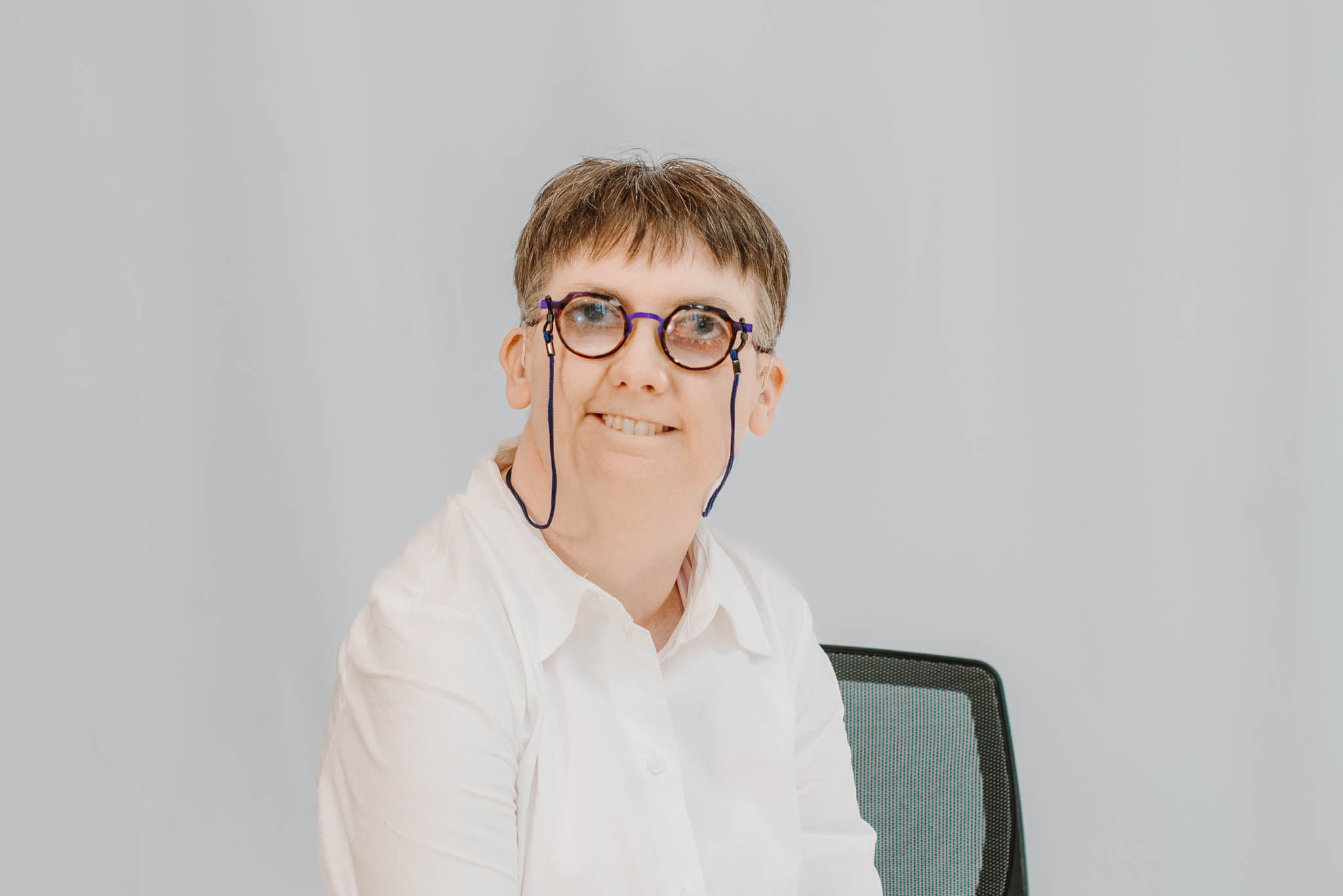
From pet-sitting, volunteer resources and administrative support to a career in emergency management and advocacy, Jen McEachen has spent the last 5 years exploring trends and gaps of the needs of the disability community. Jen, as a person with Deafblindness, is using a variety of platforms to bring awareness to emergency management professionals by providing guidance on breaking down barriers and collaborating with the disability community. In this episode, Jen will share lived experience working with emergency management professionals and with the disability community mitigate and prepare for disasters, such as inclusion and execution of exercises and networking opportunities. Additionally, ensuring communication and information are accessible for all during the response and recovery phases. Standards and legislation will also be a topic of discussion as well.
Resources:
Accessible Standards Canada - Federal Standards of Emergency Measures:
https://accessible.canada.ca/standards-and-technical-guides/standards-and-technical-guides-database/can-asc-64-emergency-measures
Federal Standards of Emergency Egress:
https://accessible.canada.ca/standards-and-technical-guides/standards-and-technical-guides-database/overview-can-asc-22-emergency-egress-exit
Accessible Canada Act:
https://www.canada.ca/en/employment-social-development/programs/accessible-canada/act-summary.html


